
International Sportsbook Safety & Licensing Guide
Run these steps before committing to any international/non‑local betting operator.
In summary
International sportsbooks require careful vetting: ensure HTTPS security, a verifiable license, clear T&Cs, transparent withdrawal rules, and responsive support, then confirm reliability by making a small deposit and withdrawal. Key checks include secure account features (2FA, device logs), predictable KYC/AML processes, clear payment rails with known fees and timelines, and consistent past payout behavior. Red flags include unverifiable licenses, unclear rules, payment delays, and evasive support. Track everything—screenshots, timestamps, bet IDs—and escalate disputes methodically if needed. Protect accounts with strong passwords, secure devices, and proper document handling, and favor operators that pass small live tests, offer clear policies, and maintain strong reputations.
Step‑by‑Step Verification
- SSL: Site uses HTTPS and shows valid certificate.
- License claim: License number displayed and verifiable on the stated registry.
- T&Cs: Clear rules on bets, voids, bonuses, and withdrawals.
- Payments: Test a small deposit and a small withdrawal.
- Support: Response within a reasonable timeframe and clear answers.
What to do next
Compare operators on the Home page. Review Payment Methods, consider value via Better Odds & Markets, and set limits in Responsible Tools.
How to validate an operator in under 15 minutes
- Open the site over HTTPS and inspect the certificate chain.
- Locate the license number in the footer and verify it on the stated registry.
- Read withdrawals and bonus sections in T&Cs; screenshot key clauses.
- Deposit a small amount via your preferred method; request a small withdrawal immediately.
- Contact support with a practical question; note response time and clarity.
If any step fails, choose a different international betting site from the list on the Home page.
Red flags to avoid
- No visible license claim or unverifiable numbers.
- Unclear or contradictory T&Cs (especially on withdrawals and void rules).
- Repeated payment delays without transparent explanations.
- Support that refuses to answer basic process questions.
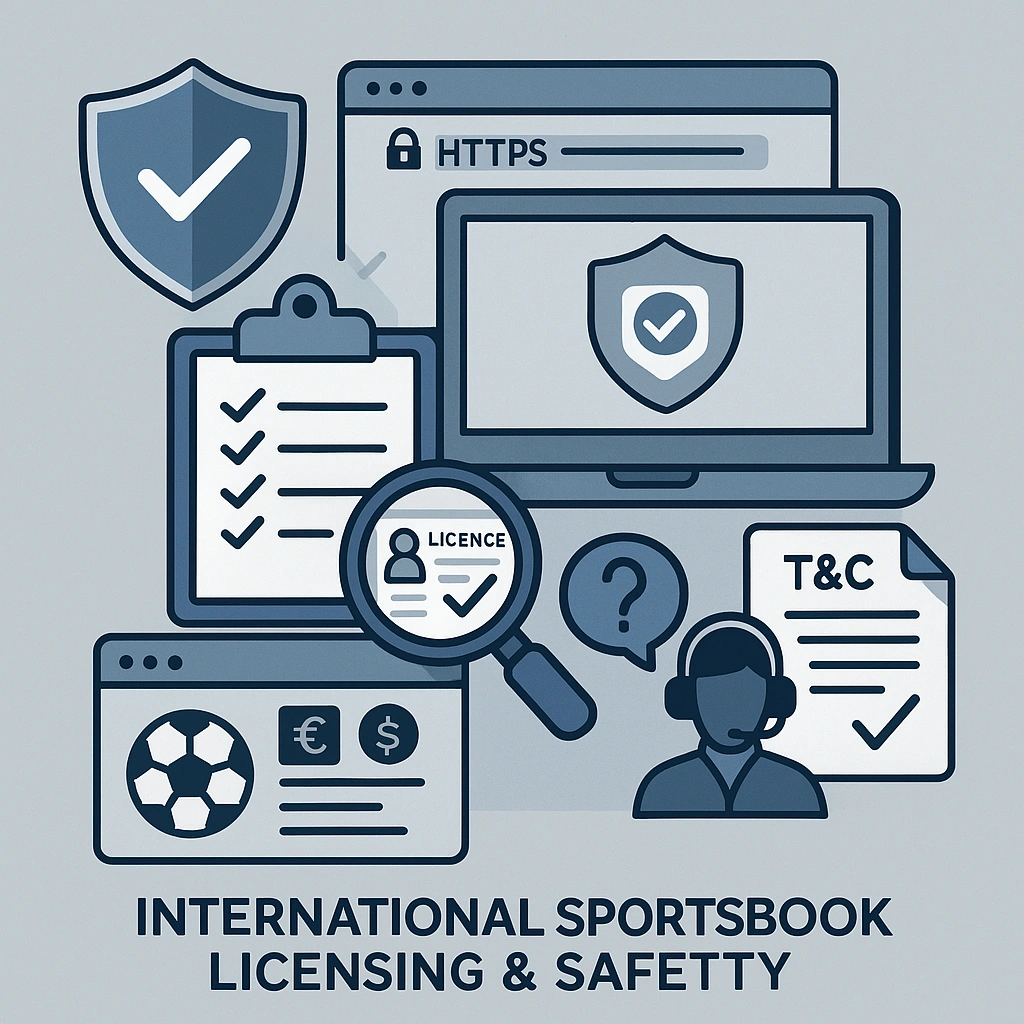
Due‑diligence playbook for international betting operators
- Identity: Company name, address, contact channels, and license registry link.
- Security: HTTPS, modern TLS, secure account practices (2FA, device logs).
- Payments: Clear fees, supported rails, processing windows, and limits.
- Product: Odds competitiveness, market depth, bet builder quality, live latency.
- Reputation: Long‑term payout behavior is weighted higher than short‑term promos.
Cross‑reference your findings with a small withdrawal test. If everything checks out, you can scale safely—always with limits from Responsible Tools.
Why safety and licensing matter for international sportsbooks
When you choose a foreign, non‑local, or offshore betting site, you’re optimizing for pricing, market depth, and payment flexibility. But reliability is the foundation of every profitable betting workflow. Licensing, security, and transparent processes protect your bankroll against operational friction: delayed payouts, unclear rules, or inconsistent grading. Treat due diligence as a mandatory pre‑bet routine — it takes minutes and can save weeks later.
Licensing is a public accountability layer: serious betting operators display their license information and comply with audits and standards, including customer fund protection, anti‑fraud, and responsible gambling provisions. Security complements this by shielding your account and personal data; together, they form the trust baseline.
Reading and testing Terms & Conditions (T&Cs) the smart way
Rather than skimming, focus on the clauses that most affect your daily experience on an international betting site. Build a quick checklist and capture screenshots of any clause that could impact payouts:
- Withdrawal rules: processing times, documents required, payout methods available, and any limits or cooling‑off periods.
- Bonus and promotions: rollover basis (bonus only vs. deposit+bonus), minimum odds, market exclusions, expiry windows, and contribution percentages.
- Bet settlement and voids: official sources used for grading, treatment of postponed/abandoned events, and partial void handling in parlays.
- Account verification: acceptable forms of ID, address verification, and how long reviews usually take once submitted.
Once you’ve read and recorded key points, run a live test: deposit a small amount and immediately request a small withdrawal to confirm real processing windows. This one action verifies more than pages of policy text.
Payments due diligence: rails, fees, and timelines
Payment rails are where trust meets execution. International sportsbooks typically support multiple options: cards, bank transfers, e‑wallets, and crypto. Each rail has pros and cons across speed, fees, and privacy:
- Cards: seamless for deposits, but banks see gaming codes; withdrawals can take 2–5 days and may incur fees.
- E‑wallets: fast settlement and easier rotation between betting operators; some require light KYC for higher limits.
- Bank transfers: robust for larger payouts with clear records, but cross‑border settlement can take longer.
- Cryptocurrency: rapid settlement and high portability; confirm correct networks and consider using stablecoins to reduce volatility.
Practical workflow: start with a small test deposit and withdrawal, note timestamps, network fees (for crypto), and any operator‑side fees. Maintain a payment ledger for transparency. For deeper rail guidance, see International Betting Payment Methods.
AML/KYC expectations: what “good friction” looks like
Legitimate international betting operators must run AML (anti‑money laundering) and KYC (know your customer) checks. Expect ID verification at certain thresholds or before first payout. “Good friction” is predictable, documented in T&Cs, and processed within sensible timelines. “Bad friction” is ad‑hoc, contradictory, or used to defer legitimate withdrawals.
- Acceptable checks: government ID, proof of address, and sometimes source‑of‑funds for high thresholds.
- Reasonable timelines: document reviews within a few business days; clear communication if more time is needed.
- Consistent application: requirements match the published policy and are applied consistently across customers.
Dispute resolution playbook
Most issues are resolved quickly when you’re systematic. Use this escalation ladder:
- Document: keep timestamps, bet IDs, screenshots of odds and rules, and chat/email transcripts.
- Clarify: ask support to cite the exact T&C clause; confirm whether the decision is final or under review.
- Escalate: request a supervisor review; keep communication polite, precise, and concise.
- Formal complaint: if provided, use the operator’s formal process and reference your dossier.
- External mediation: if applicable, review third‑party mediation or ombuds channels mentioned by the operator.
Resolution is faster when you present a clean record with exact references to the operator’s own rules.
Operational security for your accounts
Security is shared responsibility. Protect access and reduce the risk of account misuse:
- Unique credentials per site; use a password manager.
- Two‑factor authentication (2FA) wherever offered.
- Device hygiene: updated OS, antivirus, and cautious extension usage in browsers.
- Session management: sign out from shared devices and review active sessions if the operator provides logs.
Combine these with responsible limits from Responsible Tools to minimize both security and behavioral risks.
Data protection and privacy
Reputable international sportsbooks describe how they store and process your data. Look for HTTPS everywhere, sensible retention periods, and clear privacy notices. Avoid emailing documents unencrypted; prefer in‑site document upload portals, and check if masking sensitive IDs is allowed per instructions.
Geolocation, access, and responsible use
Access policies vary by operator and region. Always comply with your local laws and the operator’s terms. If your usual access path changes (travel, network changes), confirm that your gameplay remains within allowed territories and that your account status is unaffected before placing new bets.
Scoring rubric: rate any betting operator quickly
| Dimension | What to check | Score (1–5) |
|---|---|---|
| Identity & License | Public license claim, verifiable registry entry | |
| Security | HTTPS, TLS, 2FA, session/device logs | |
| Payments | Methods, fees, limits, real test payout time | |
| T&Cs Clarity | Withdrawals, bonuses, settlement rules | |
| Support | Responsiveness, accuracy, escalation path | |
| Reputation | Historical payout behavior outweighs promos |
Sum the scores to compare operators; prioritize those with strong Identity, Payments, and T&Cs first.
Templates you can copy
Support message: “Hello, I’m validating my account. Could you confirm withdrawal processing times for [Payment Method], and any fees or limits? My plan is to request a small payout after a small deposit for verification. Thank you.”
Internal note: “Operator: [Name]. License: [Number/Registry]. Deposit: [Time/Amount/Method]. Payout test: [Time/Amount/Method]. Outcome: [Minutes/Hours/Days].”
Extended FAQ
What’s the single most important test? A successful small withdrawal after initial KYC. It proves the payout path works.
Do reputable operators ever ask for more documents? Yes, especially at higher thresholds or when payment details change. This is normal if consistent with published policy.
How do I avoid bonus disputes? Save the promo page and T&Cs at opt‑in, track your qualifying bets, and confirm minimum odds and expiry windows in advance.
Can I keep multiple international sportsbook accounts? Yes. Many bettors do for line shopping. Keep records and run a payout test on each new account.
Is faster always better? Not if faster means less clarity. Prefer operators with transparent policies and predictable timelines over flashy promises.
Glossary: safety and compliance terms
- KYC: identity checks required to verify customers and reduce fraud.
- AML: procedures to prevent money laundering and related crimes.
- Overround: the bookmaker margin embedded in prices; see Better Odds.
- Void rules: conditions under which bets are canceled and stakes returned.
- Chargeback: reversing a card transaction; often triggers extra checks or account review.