
Choose Your Payment Rail for Offshore/International Sportsbooks
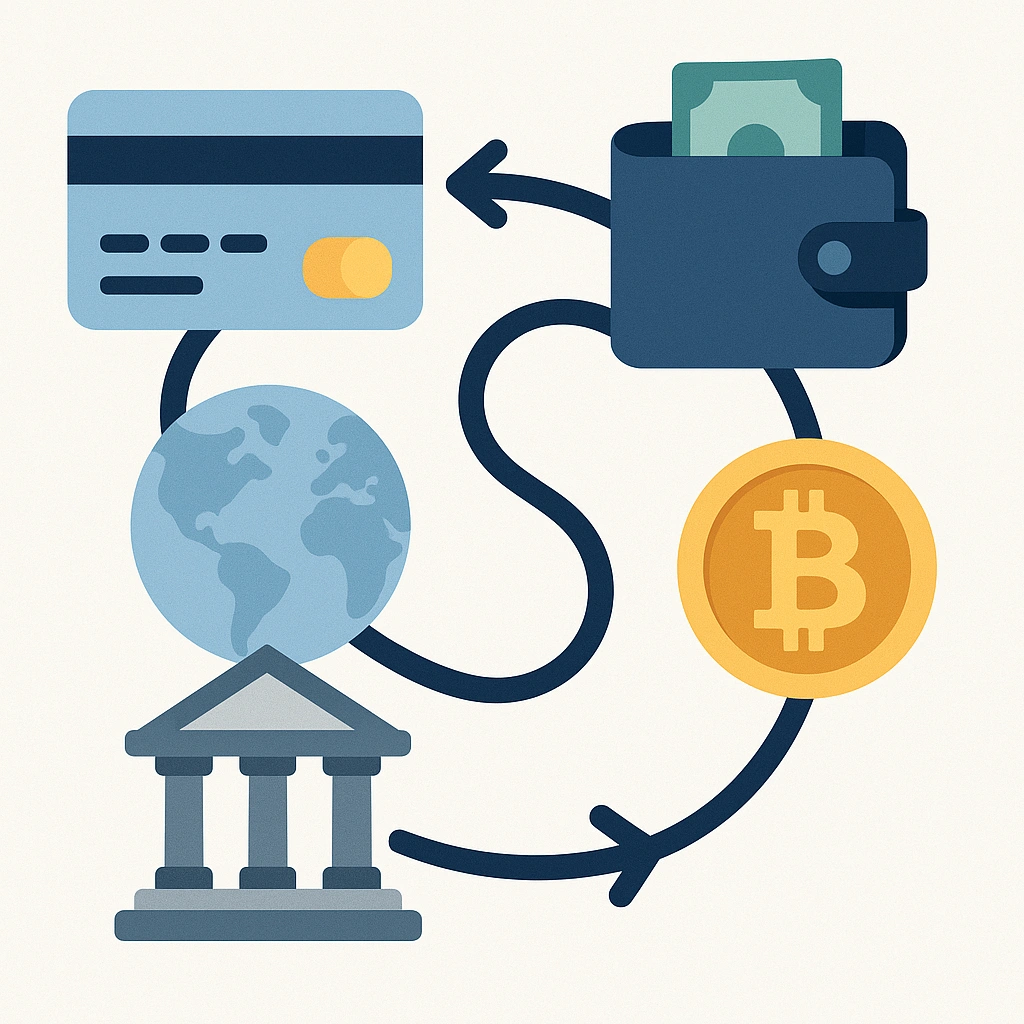
Choose the right channel for offshore/non‑local sportsbooks: cards, e‑wallets, bank wires, or crypto.
In summary
Payment options for international sportsbooks vary by speed, cost, and privacy: cards are easy but can face bank scrutiny and slower withdrawals; e-wallets offer fast, flexible transfers and help manage funds across multiple sites; bank transfers suit large sums with strong traceability but are slower; and cryptocurrency provides the fastest and most private transactions, especially with stablecoins, though it requires careful network selection and security. Best practices include testing small deposits and withdrawals first, keeping multiple payment methods, maintaining strong security, and tracking all transactions to optimize reliability and efficiency.
Quick Selector
Rank options based on what matters most to you.
Overview
- Cards (Visa/Mastercard): universal acceptance, but banks see gaming MCC; payouts 2–5 days; possible FX fees.
- E‑wallets (Skrill/Neteller, etc.): fast settlement, can mask merchant category; useful for international sportsbooks.
- Bank transfers: robust but slower (3–7 business days), clear audit trail; good for larger withdrawals.
- Cryptocurrency: fastest settlement and highest privacy; ensure correct network/addresses and consider volatility.
For bonus strategies and wagering implications, see the Bonus Decoder. For validating operators, use the Licensing & Safety Checklist.
Cards (Non‑local/international use)
Cards are familiar and widely accepted. However, issuers can see merchant categories, which may cause friction in stricter regions. Expect near‑instant deposits and 2–5 business days for withdrawals, with possible FX or cash‑advance style fees. If your bank declines gaming transactions, try an e‑wallet or crypto on a reputable offshore betting site.
E‑wallets
E‑wallets are popular among international bettors because they settle quickly and can reduce bank scrutiny. They also centralize deposits/withdrawals across multiple sportsbooks, making bankroll management easier. Fees vary by provider and currency corridor. Many users keep a small float in their wallet for fast moves between betting operators.
Bank transfers
Bank wires are reliable for larger sums, with a clear audit trail. The trade‑off is speed: cross‑border transfers can take up to a week, and banks may levy incoming/outgoing fees. Always double‑check beneficiary details provided by the sportsbook and keep confirmation receipts for reconciliation.
Cryptocurrency
Crypto excels on speed and privacy when supported by the operator. Choose the correct network (e.g., BTC vs. Lightning, ERC‑20 vs. native) and factor in fees. Consider volatility and stablecoin options for value preservation. Run a small test transaction first; then scale up once confirmed. Many international sportsbooks post withdrawals on‑chain within minutes.
Want a selection of reputable international sportsbooks that support crypto? Visit thebitcoinreview.com to find up to date information on which sportsbooks accept crypto and how to use it.
Not sure what fits your priorities? Use the selector above, then compare odds value in Better Odds & Markets.
Choosing your rail by persona
Different bettors prioritize different things. Here are archetypes and the rails that usually fit best on international/offshore betting sites:
- The Speed‑Focused Punter: Crypto first, then e‑wallets. You want rapid redeployment and same‑day settlements.
- The Fee‑Sensitive Saver: Bank transfers for large moves; stablecoins on low‑fee networks for mid‑sized activity.
- The Privacy‑Conscious Bettor: Crypto or e‑wallets that avoid direct bank descriptors, plus careful operational hygiene.
- The High‑Volume Grinder: E‑wallet float to rotate between operators; periodic bank withdrawals for accounting.
End‑to‑end payment playbook
- Pick your primary rail and set up security (2FA, unique passwords, hardware wallet if crypto).
- Fund the first small deposit; capture reference IDs and screenshots.
- Submit a small withdrawal immediately after KYC to validate payout speed and fees.
- Track every movement in a ledger with time, amount, fees, and method for full transparency.
- Scale deposits once you’ve confirmed the operator’s reliability; maintain a backup rail.
Before scaling up, compare operator pricing and markets in Better Odds & Markets, and review risk controls in Responsible Tools.
Regional considerations without naming specific regulators
Some regions have banks that are more conservative about gaming merchant categories. If you face declines or delays:
- Switch to an e‑wallet with a proven track record for gaming transactions.
- Use crypto rails with small‑value tests first; prefer stablecoins for reduced volatility.
- Contact operator support to confirm accepted corridors and payout windows.
FAQ: payments for international betting operators
Are crypto withdrawals really faster? Often yes. Many operators process within hours, then it’s up to network confirmation.
Do e‑wallets ask for KYC? Policies vary. Some allow usage with light verification; higher limits typically require ID.
What if my bank flags a card deposit? Try a smaller amount, a different card, or switch to e‑wallet/crypto. Keep records.
How do I minimize FX costs? Prefer accounts in the sportsbook’s base currency or use low‑FX e‑wallets/stablecoins.
Cost breakdown by rail (qualitative)
Costs vary by corridor, currency, and operator policy. Use these qualitative ranges to plan:
- Cards: Deposit fees usually low or waived; hidden FX spreads possible. Withdrawals can incur flat fees or percentage‑based costs depending on issuer.
- E‑wallets: Low internal transfers, moderate FX spread, occasional cash‑out fees. Competitive for multi‑operator bankroll rotation.
- Bank transfers: Fixed bank fees on both ends and possible correspondent bank deductions; best suited for larger sums.
- Crypto: Network fees fluctuate; pick efficient networks and consider timing. Operator withdrawal fees vary; stablecoins can reduce volatility risks.
Corridor examples (illustrative)
Corridors differ in speed and fees. While exact figures change over time, these patterns are common:
- Card → Operator (EUR): Instant to minutes for deposits; withdrawals 2–5 business days; minor FX if non‑EUR card.
- E‑wallet → Operator (multi‑currency): Minutes both ways after verification; FX within wallet typically beats bank FX.
- Bank transfer (SEPA): 1–2 business days in and out; low fees, reliable reconciliation.
- Crypto (stablecoin): Minutes to hours depending on chain; small to moderate network fees; high portability across operators.
Validate your own corridor with a small end‑to‑end test before scaling stake sizes.
Security practices for payment rails
- Card hygiene: avoid saving card details on shared devices; enable bank alerts for transactions.
- E‑wallet security: 2FA mandatory; review trusted devices; enable login notifications.
- Bank transfer controls: whitelist beneficiary details; verify IBAN/SWIFT from official operator pages only.
- Crypto safety: verify addresses via checksum, test small amounts first, prefer hardware wallets for large balances.
Combine these with operator verification steps in Licensing & Safety before committing significant funds.
Operational workflows you can adopt today
- Weekly ledger: record every deposit/withdrawal with timestamps, method, fees, and notes on speed.
- Float balancing: keep a modest e‑wallet or stablecoin float ready to exploit value across sportsbooks.
- Reconciliation: match operator balances to your ledger weekly; investigate discrepancies promptly.
- Quarterly review: analyze which payment rails produced the best balance of speed, fees, and reliability.
Common mistakes to avoid
- Depositing large amounts before running a small withdrawal test.
- Ignoring FX conversion costs and hidden spreads.
- Using a single payment rail with no backup, risking downtime.
- Sending crypto on the wrong network or to incompatible addresses.
Comprehensive pre‑deposit checklist
- Operator verified via Licensing & Safety (license claim, T&Cs, support responsiveness).
- Chosen rail set up with 2FA and alerts (or hardware wallet for crypto).
- Plan for a small withdrawal test immediately after deposit and KYC.
- Ledger template ready to track fees, timings, and any issues.
Decision tree: which payment method should you use?
If speed is non‑negotiable, start with Crypto → E‑wallets. If fees are your priority and you move larger sums, consider Bank transfer → Crypto stablecoins. If privacy matters, E‑wallets → Crypto usually yield cleaner statements. Always backstop with a secondary rail.
Case studies (illustrative)
Case A — Speed: A bettor rotates bankroll across two international sportsbooks pre‑match and in‑play. Using a stablecoin on a fast chain, withdrawals post on‑chain within 30–60 minutes, enabling same‑day redeployment at the sharper site.
Case B — Fees: A bettor who settles weekly prefers bank transfers for larger redemptions, accepting slower settlement in exchange for lower aggregate costs and robust records.
Case C — Privacy: A bettor pairs e‑wallet deposits with periodic crypto redemptions, keeping bank statements clean while maintaining flexibility.
Extended FAQ (payments)
Can I mix rails? Yes, many do: deposit by card/e‑wallet, withdraw via bank/crypto once verified.
What if withdrawal goes back to the source only? Some operators require returning to the original method up to deposit amount; plan accordingly.
Are stablecoins better than BTC/ETH? For volatility control, yes; for fees/speed, it depends on the chain and congestion.
Does every e‑wallet allow gaming? Policies differ by provider and region; confirm before moving funds.
Glossary (payments)
- MCC: Merchant Category Code visible to card issuers/banks.
- SEPA: Euro transfer scheme with relatively low fees and fast settlement.
- Stablecoin: Crypto asset pegged to a currency to reduce volatility.
- On‑chain fee: Network fee required to include a transaction in a block.
- Float: Working balance kept ready to move across operators quickly.